
Dua for Waking Up: Arabic, Meaning & 5 Beautiful Tips
Dua for Waking Up: authentic Arabic text, transliteration, English meaning and source (Sahih al-Bukhari 6312). Learn when and how to recite it.
The Dua in Arabic
الْحَمْدُ لِلَّهِ الَّذِي أَحْيَانَا بَعْدَ مَا أَمَاتَنَا، وَإِلَيْهِ النُّشُورُ
───── ❖ ─────
Meaning of the Dua
All praise is for Allah who gave us life after causing us to die, and to Him is the resurrection.
When to Recite
Say it as soon as you wake up from sleep, before anything else.
Benefits of This Dua
Follows the authentic Sunnah of the Prophet ﷺ.
Brings the remembrance of Allah into daily life.
Strengthens trust and reliance on Allah.
Earns reward for a simple, consistent deed.
Source and Reference
Sahih al-Bukhari 6312, Sahih Muslim 2711 (Hisn al-Muslim 1)
Explanation
Waking up is a daily reminder of the resurrection, and this is the first word of a believer’s day.
Every situation in a Muslim’s life has a remembrance, and the dua for waking up is a beautiful example. Here is the authentic Arabic text with transliteration, translation and source, plus a simple explanation of its meaning.
Sleep is one of Allah’s signs and a small rehearsal of death, which is why the Prophet ﷺ had a whole set of adhkar for going to bed and waking up. These duas protect us through the night, help us sleep in peace and give the day a blessed start. Bad dreams and sleepless nights are also addressed in the Sunnah with simple practical steps.
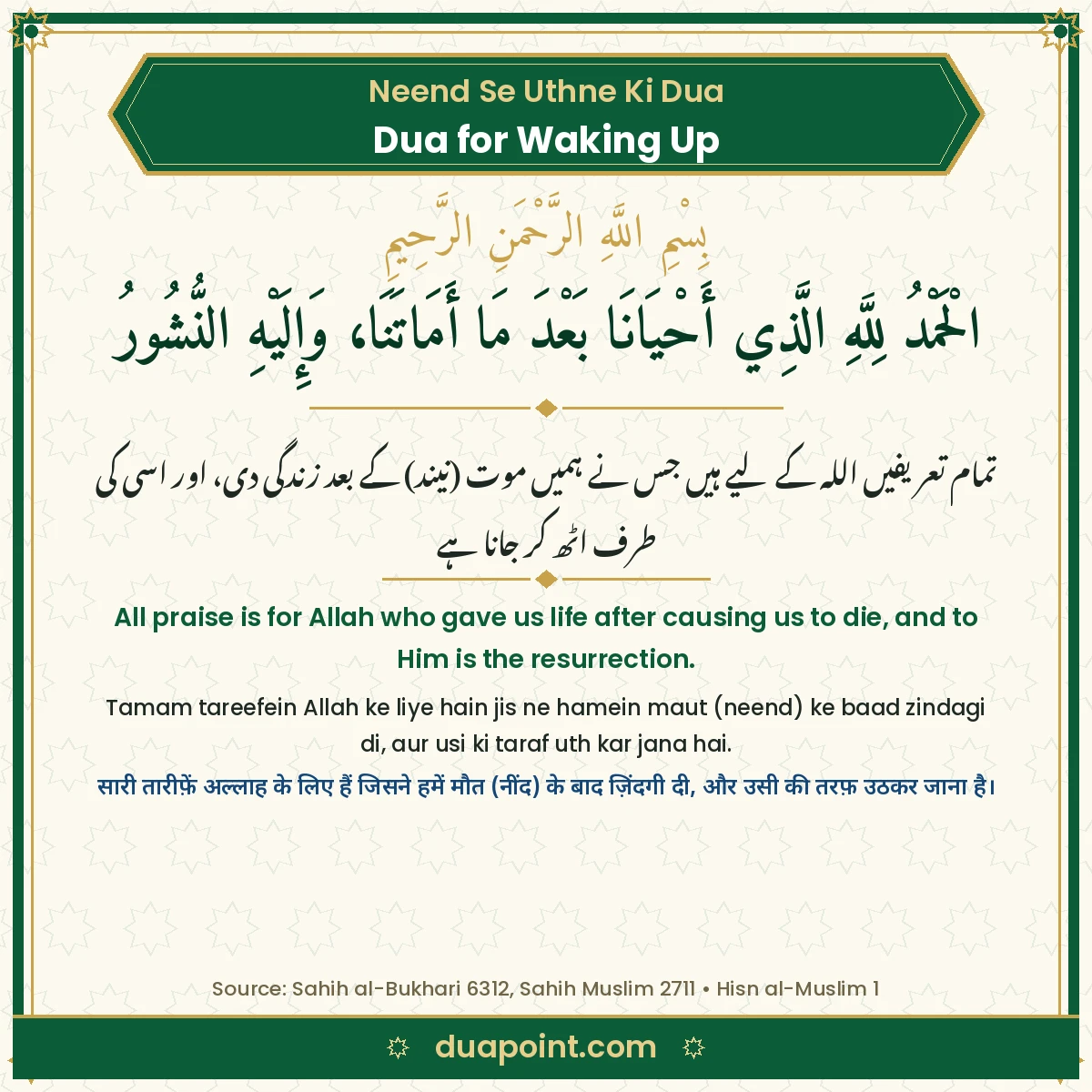

Dua for Waking Up: Arabic, Transliteration and Meaning
Here is the authentic wording to use for the dua for waking up. Waking up is a daily reminder of the resurrection, and this is the first word of a believer’s day.
الْحَمْدُ لِلَّهِ الَّذِي أَحْيَانَا بَعْدَ مَا أَمَاتَنَا، وَإِلَيْهِ النُّشُورُ
Transliteration: Alhamdu lillahil-ladhi ahyana ba’da ma amatana wa ilayhin-nushur
Meaning: All praise is for Allah who gave us life after causing us to die, and to Him is the resurrection.
Urdu: تمام تعریفیں اللہ کے لیے ہیں جس نے ہمیں موت (نیند) کے بعد زندگی دی، اور اسی کی طرف اٹھ کر جانا ہے۔
Roman Urdu: Tamam tareefein Allah ke liye hain jis ne hamein maut (neend) ke baad zindagi di, aur usi ki taraf uth kar jana hai.
Hindi: सारी तारीफ़ें अल्लाह के लिए हैं जिसने हमें मौत (नींद) के बाद ज़िंदगी दी, और उसी की तरफ़ उठकर जाना है।
Source: Sahih al-Bukhari 6312 (Hudhayfah) and Sahih Muslim 2711 (al-Bara’ ibn ‘Azib); Hisn al-Muslim no. 1 (Sunnah.com)
When to recite: Say it as soon as you wake up from sleep, before anything else.
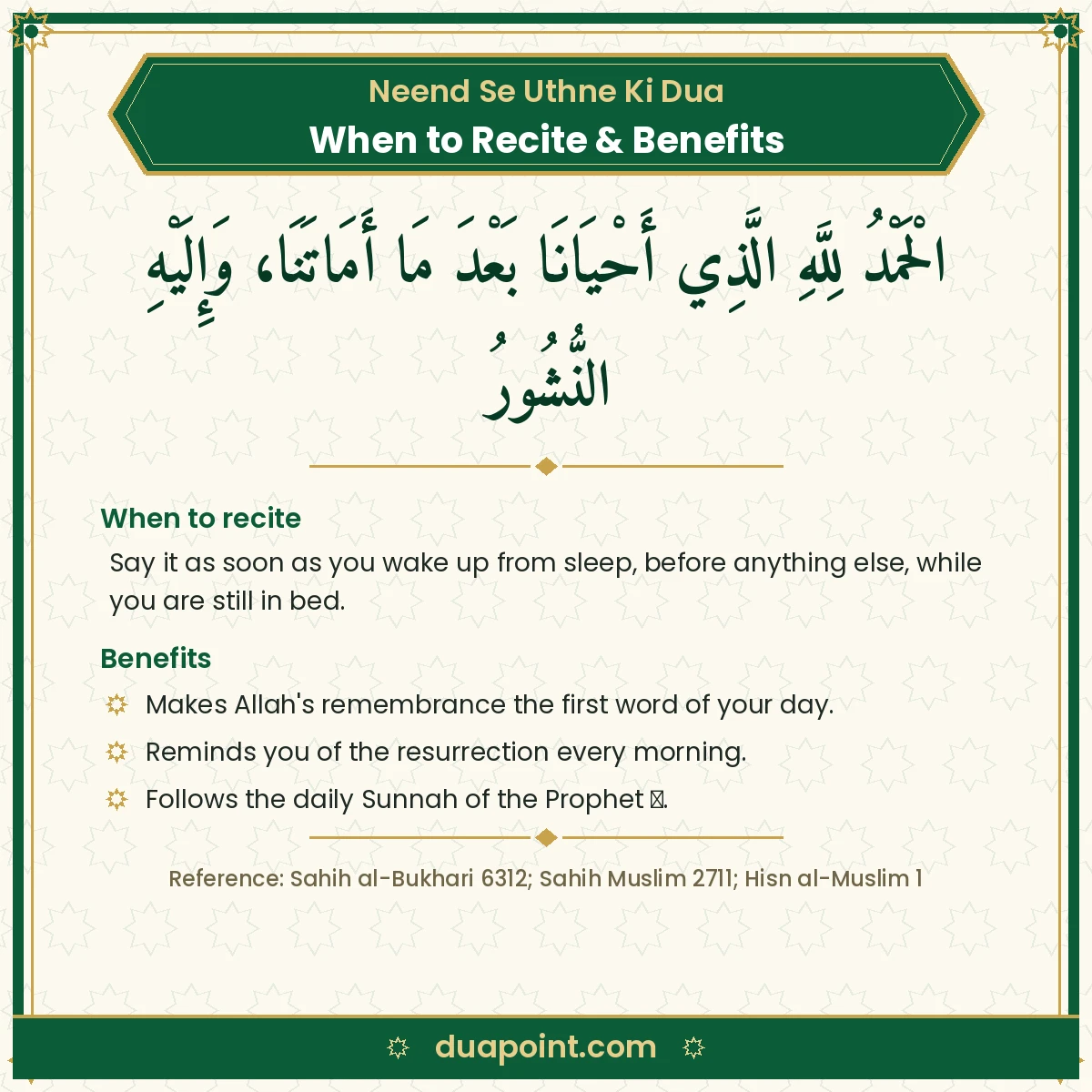
5 Simple Steps to Recite the Dua for Waking Up
The best way to benefit from the dua for waking up is to make it part of your routine. Follow these simple steps:
- Make wudu before going to bed if you can.
- Recite Ayat al-Kursi and the last three surahs, blowing into your hands and wiping over your body three times.
- Lie on your right side with your hand under your cheek and say the bedtime dua.
- When you wake up, say the waking dua straight away and use the miswak.
- If you see a bad dream, follow the Sunnah steps and do not tell people about it.
Meaning and Lessons of This Dua
Reflecting on the meaning is what turns words into worship. All praise is for Allah who gave us life after causing us to die, and to Him is the resurrection. These words teach humility, trust in Allah and gratitude, three qualities that sit at the heart of every authentic dua.
Allah says: ‘It is He who takes your souls by night’ (Quran 6:60). Every night we hand our soul to Allah, and every morning He returns it. Starting and ending the day with His remembrance is a simple way to make sure our last and first words are good.
Other Authentic Duas Related to Dua for Waking Up
The Sunnah often gives more than one supplication for the same situation. Here are related duas you can add:
None has the right to be worshipped but Allah alone, without partner; His is the dominion
Whoever wakes at night and says this, then asks forgiveness or makes dua, will be answered; and if he prays, his prayer is accepted.
لاَ إِلَهَ إِلاَّ اللَّهُ وَحْدَهُ لاَ شَرِيكَ لَهُ، لَهُ الْمُلْكُ وَلَهُ الْحَمْدُ، وَهُوَ عَلَى كُلِّ شَيْءٍ قَدِيرٌ، الْحَمْدُ لِلَّهِ، وَسُبْحَانَ اللَّهِ، وَلاَ إِلَهَ إِلاَّ اللَّهُ، وَاللَّهُ أَكْبَرُ، وَلاَ حَوْلَ وَلاَ قُوَّةَ إِلاَّ بِاللَّهِ، اللَّهُمَّ اغْفِرْ لِي
Transliteration: La ilaha illallahu wahdahu la sharika lah, lahul-mulku wa lahul-hamd, wa huwa ‘ala kulli shay’in qadir. Alhamdulillah, wa subhanallah, wa la ilaha illallah, wallahu akbar, wa la hawla wa la quwwata illa billah. Allahummaghfir li
Meaning: None has the right to be worshipped but Allah alone, without partner; His is the dominion and the praise and He is able to do all things. All praise is for Allah, glory be to Allah, there is no god but Allah, Allah is the Greatest, and there is no might nor power except with Allah. O Allah, forgive me.
Source: Sahih al-Bukhari 1154
Other Ways People Search for This Dua
This guide covers all of the following questions, since they refer to the same authentic dua and Sunnah:
- dua after waking up
- dua when waking up
- dua after sleeping
- dua of waking up
- dua to wake up for fajr
- dua after waking up from sleep
- dua upon waking up
- dua to wake up
- doa after sleep
- dua upon awakening
Each of them is answered by the same authentic wording and guidance given above.
‘Doa’ is the Malay and Indonesian spelling of the Arabic word du’a; the meaning and the authentic wording are exactly the same.
In Your name, O Allah, I die and I live
Sleep is called the minor death, and this dua puts our life and death in Allah’s hands every night.
بِاسْمِكَ اللَّهُمَّ أَمُوتُ وَأَحْيَا
Transliteration: Bismika Allahumma amutu wa ahya
Meaning: In Your name, O Allah, I die and I live.
Source: Sahih al-Bukhari 6312 and 6324
Allah: there is no god but Him, the Ever-Living, the Sustainer of all
Ayat al-Kursi is the greatest verse of the Quran (Sahih Muslim 810) and a strong shield against harm.
اللَّهُ لاَ إِلَهَ إِلاَّ هُوَ الْحَيُّ الْقَيُّومُ، لاَ تَأْخُذُهُ سِنَةٌ وَلاَ نَوْمٌ، لَهُ مَا فِي السَّمَاوَاتِ وَمَا فِي الأَرْضِ …
Transliteration: Allahu la ilaha illa huwal-Hayyul-Qayyum, la ta’khudhuhu sinatun wa la nawm, lahu ma fis-samawati wa ma fil-ard … (Ayat al-Kursi)
Meaning: Allah: there is no god but Him, the Ever-Living, the Sustainer of all. Neither drowsiness nor sleep overtakes Him. To Him belongs whatever is in the heavens and whatever is on the earth…
Source: Quran, Surah al-Baqarah 2:255; Sahih al-Bukhari 2311 (whoever recites it at bedtime has a guardian from Allah until morning)

Etiquette of Making Dua
To give your dua the best chance of acceptance, keep these authentic etiquettes in mind:
- Choose times of acceptance: the last third of the night, between adhan and iqamah, in sujud and on Friday.
- Call on Allah by His beautiful names that fit your request (Quran 7:180).
- Repeat your dua three times, as the Prophet ﷺ often did (Sahih Muslim 1794).
- Pray for others in their absence; an angel says ‘and for you the same’ (Sahih Muslim 2732).
- Combine dua with action and trust in Allah.
Many families keep the dua for waking up written on a small card near the door or dining table so that children see it every day and learn it naturally.
Scholars remind us that the dua for waking up is most beneficial when the heart is present, so pause for a moment before saying it and think about Whom you are addressing.
Common Mistakes to Avoid
- Using wording from social media posts or forwards that has no reference. Always look for a Quran or hadith source.
- Adding fixed numbers, times or rewards that are not in the hadith.
- Reading quickly without understanding; learning the meaning brings presence of heart.
- Treating the dua like a charm while neglecting the obligatory prayers.
- Giving up because the answer seems late; Allah answers in the way and time that is best.
Frequently Asked Questions about the Dua for Waking Up
What is the authentic dua for waking up?
The authentic wording is: Alhamdu lillahil-ladhi ahyana ba’da ma amatana wa ilayhin-nushur. It means: “All praise is for Allah who gave us life after causing us to die, and to Him is the resurrection.” Source: Sahih al-Bukhari 6312.
What should I recite before sleeping?
The Sunnah includes Ayat al-Kursi, Surah al-Ikhlas, al-Falaq and an-Nas, the last two verses of al-Baqarah and the dua Bismika Allahumma amutu wa ahya.
What should I do after a bad dream?
Spit lightly to your left three times, seek refuge in Allah from Shaytan three times, turn to your other side and do not tell anyone about it (Sahih Muslim 2261-2262).
Is there a dua for waking up for Fajr?
There is no specific dua for this, but sleeping early, making the intention to wake up and reciting the bedtime adhkar all help.
If you are teaching the dua for waking up to a new Muslim or a child, start with the meaning in your own language, then add the Arabic one phrase at a time.
Revising the dua for waking up once a week, for example after Jumu’ah, is a simple way to keep it fresh in your memory.
Key Takeaways
- The authentic dua for waking up is: Alhamdu lillahil-ladhi ahyana ba’da ma amatana wa ilayhin-nushur
- Its source is Sahih al-Bukhari 6312; you can check it on Sahih al-Bukhari 6312 on Sunnah.com.
- Say the dua for waking up with understanding and presence of heart, not as a charm.
- Combine dua with effort, patience and the obligatory prayers.
Related Duas You May Find Helpful
Continue learning with these related guides from our Duas collection and Islamic Posts:
Conclusion
The dua for waking up is a simple way to bring Allah into a moment of your day. Learn the Arabic, understand the meaning, and say it with a present heart. Share it with your family so that the reward continues, and remember that Allah loves to be asked: “Call upon Me; I will respond to you” (Quran 40:60).
Audio: Hisnul Muslim recitation by Hamad Al-Duraihim, IslamHouse.com
-

Dua When Wearing Clothes: Arabic, Meaning & 5 Beautiful Tips
Dua When Wearing Clothes: authentic Arabic text, transliteration, English…
-
Dua When Looking in the Mirror: 5 Beautiful Sunnah Tips
Dua When Looking in the Mirror: authentic Arabic text,…
-

Dua When Leaving Home: Arabic, Meaning & 5 Beautiful Tips
Dua When Leaving Home: authentic Arabic, transliteration, meaning and…
-

Dua After Eating: Arabic, Meaning & 5 Beautiful Tips
Dua After Eating: authentic Arabic, transliteration, meaning and hadith…
-
Dua Before Eating: Arabic, Meaning & 5 Beautiful Tips
Dua Before Eating: authentic Arabic, transliteration, meaning and hadith…
أَلَا بِذِكْرِ اللَّهِ تَطْمَئِنُّ الْقُلُوبُ
“Verily, in the remembrance of Allah do hearts find rest.”
Surah Ar-Ra’d 13:28
-
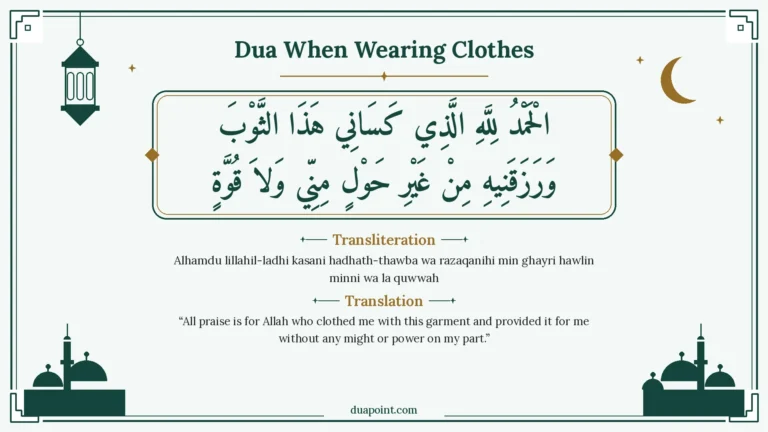
Dua When Wearing Clothes: Arabic, Meaning & 5 Beautiful Tips
Dua When Wearing Clothes: authentic Arabic text, transliteration, English meaning and source…
-
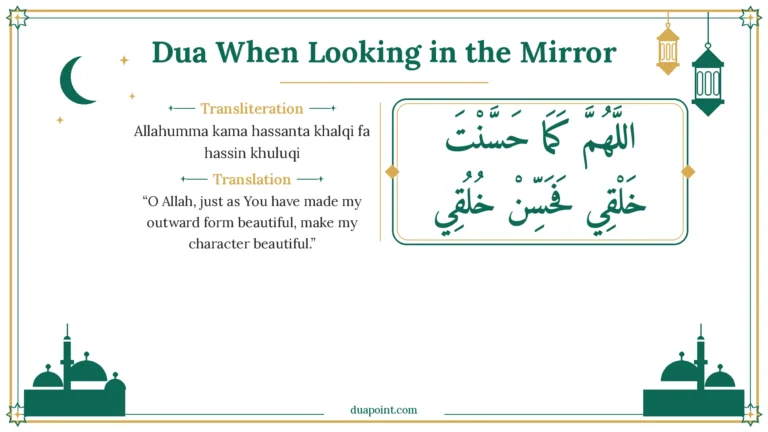
Dua When Looking in the Mirror: 5 Beautiful Sunnah Tips
Dua When Looking in the Mirror: authentic Arabic text, transliteration, English meaning…
-
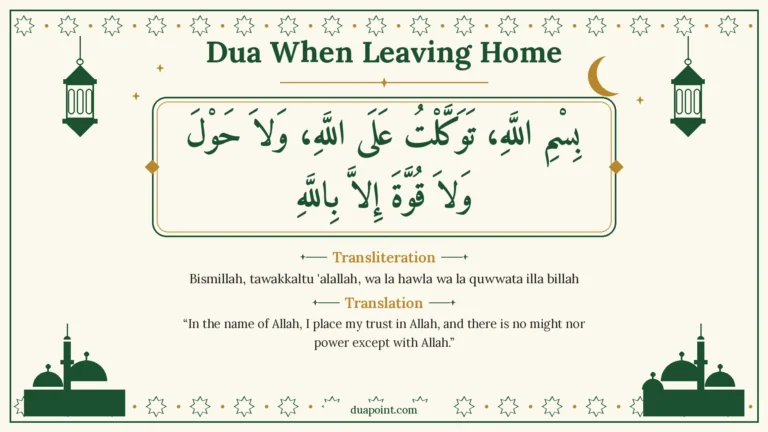
Dua When Leaving Home: Arabic, Meaning & 5 Beautiful Tips
Dua When Leaving Home: authentic Arabic, transliteration, meaning and hadith source, with…
-
Dua After Eating: Arabic, Meaning & 5 Beautiful Tips
Dua After Eating: authentic Arabic, transliteration, meaning and hadith source, with tips…